
Thursday, November 13, 2014


Tuesday, November 4, 2014
Stryker: $1.43 BILLION Settlement Offer (Criminal ?!)
http://www.nytimes.com/2014/11/04/business/stryker-settles-suits-by-hip-implant-patients-for-dollar1-billion.html?emc=edit_tnt_20141103&nlid=50639700&tntemail0=y&_r=0
Stryker Settles Suits by Hip Implant
Patients for $1 Billion
By BARRY MEIER
NOV. 3, 2014
Stryker, the major producer of artificial
hip implants, said on Monday that it had reached a settlement of
thousands of patient lawsuits involving now-recalled all-metal devices that is
expected to cost the company about $1 billion.
The Stryker deal, negotiated with
lawyers representing the patients, would be one of the highest amounts paid in
the last year by an implant manufacturer to resolve claims by patients who said
they were injured by a hip replacement in which a device’s ball and cup
components were both made from metal.
Last November, the DePuy division
of Johnson & Johnson agreed to pay about $2.5
billion to resolve lawsuits filed by 8,000 patients who said they were injured
by an all-metal implant that it once sold, known as the Articular Surface
Replacement or A.S.R.
All-metal implants once accounted for about one of every three devices used in the estimated 250,000 hip replacement procedures that
are performed annually in this country. The devices have been largely abandoned
after evidence emerged several years ago that the metal components could rub
together, creating tiny particles of metallic debris that could severely damage a patient’s tissue and
muscle.
In announcing the settlement,
Stryker, which is based in Kalamazoo, Mich., said that it covered patients who
had received the Rejuvenate
Modular-Neck or the ABG II Modular-Neck and who underwent operations to
have the implant replaced. Stryker recalled both models in 2012 as complaints increased.
Stryker said that it had set aside
$1.45 billion to settle the claims but that it expected the eventual expenses to be higher.
“This settlement program provides
patients compensation in a fair, timely and efficient manner,” said William J.
Huffnagle, the president of Stryker Orthopaedics.
Since abandoning all-metal implants,
surgeons have returned to devices made of a mix of materials, such as
plastic and metal.
http://atlanta.legalexaminer.com/defective-dangerous-products/hip-implant-settlement-proposal-announced-on-stryker-rejuvenate-and-abgii-cases/
Hip Implant Settlement
Proposal Announced On Stryker Rejuvenate and ABGII Cases
Posted by Richard R.
Schlueter
November 3, 2014 4:00 PM


Just over two years since
the Stryker
Rejuvenate and ABGII hip implant products were recalled from the
market in June 2012, national leadership in the multi-district litigation (MDL) today announced a global settlement proposal
for all Stryker Rejuvenate and ABGII hip implant victims who have undergone revision surgery to remove and
replace their recalled Stryker hip implant on or before November 2, 2014.
The settlement proposal includes a base award amount of $300,000.00 to each claimant
who has undergone revision surgery on or before to November 2, 2014, and
otherwise qualifies for the settlement. There are certain limited potential
reductions to the base award for age, prior hip revisions, and other relevant
factors. Claimants may also receive additional compensation, referred to
in the proposed settlement as “Enhancements,” at a later date if they can
demonstrate that they meet the eligibility requirements for the categories set
forth in the settlement agreement.
Although participation is
voluntary, it is expected that many of those that qualify (those who have had
their recalled Stryker hip removed and replaced on or before November 2, 2014)
will benefit from the settlement program, and may ultimately decide to
participate in the settlement. Any such decision should be made on an
individual, case-by-case basis.
The following is a basic
summary highlighting key aspects of the Master Settlement Agreement:
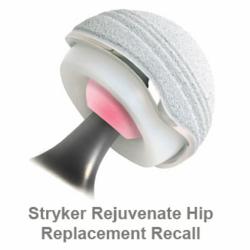
Stryker
Hip Settlement
The settlement program applies to patients who are U.S.
citizens and residents who had either an ABG II Modular Neck System or a
Rejuvenate Modular Neck System implanted in their bodies in the United States,
and who had a qualified surgery to remove and replace the recalled device on or
before November 2, 2014. The settlement program is also open to certain patients who
have been deemed to be too sick or medically unstable to undergo a necessary
revision surgery.
At Childers, Schlueter &
Smith, our attorneys will immediately undertake to determine how the proposed
settlement will affect each of our clients, and will work with each client
individually to carefully consider the benefits of the proposed settlement so
that they can make an informed
personal decision on whether or not to participate. As a
nationally appointed leader in this litigation, founding partner Richard R.
Schlueter will ensure each and every one of our clients has all of
the information he/she needs to make the best choice for his/her unique
situation. Richard
Schlueter has been involved in the various hip implant litigations
(including DePuy ASR/Pinnacle, Zimmer Durom Cups, Biomet M2a Magnum and Wright
Conserve Plus among many others) for several years, and has unique knowledge
relating to hip implant failures and the injuries caused by those failures. Our
current and future clients will be continue to be very well represented and
informed during the entire process.
Attorneys representing those interested in participating in the Stryker
hip implant settlement will have to register their clients in the program on or
before the initial reporting deadline of December 14, 2014. After that, the next deadline will be the formal
enrollment of each individual patient who chooses to participate into the
Settlement Program. Those
qualified claimants who would like to participate in the settlement program
must enroll by March 2, 2015. If less than 95% of the qualified claimants
elect to participate in the settlement, Stryker has the ability to walk away
and cancel the settlement program. Stryker must make that decision on or
before June 15, 2015. Assuming the participation threshold is met
and the settlement continues after June 15, 2015, the deadline to file claims
for Enhanced benefits is September 30, 2015. Additional compensation
through the Enhanced benefits portion of the settlement will relate to damage
to the femur, soft tissue damage, additional procedures and infection.
There is a cap on the Enhanced damages so that most total claims (Base award
and Enhanced benefits) will be no more than $550,000.00 per claimant.
Based on the timing of the
deadlines in the proposed settlement, it is unlikely that any settlement
payments will be made prior to late summer or early fall 2015.
For patients who are not
eligible for the settlement program, Stryker’s existing program for
reimbursement of eligible out of
pocket costs, administered
by Broadspire, remains available. The decision to undergo a revision
surgery is a medical decision, not a legal decision, and should be made only by
patients in consultation with their surgeons. If you were implanted with
a recalled Stryker Rejuvenate or ABGII hip implant product but are not eligible
for the settlement program, all of your legal rights and claims are preserved
and you will not be affected so long as you have a filed legal claim with the
Court. Patients who have been implanted with a recalled Stryker hip in
both hips (referred to as “bilateral” hip implants), in whom only one hip has
been revised, will retain all of their claims and legal rights in regard to the
unrevised hip, even if they participate in the settlement for their revised
hip.
Childers,
Schlueter & Smith is committed to
continue litigating all claims for our clients who don’t qualify, who are
arbitrarily penalized so as to not receive an offer under this proposal, who
have not had revision surgery by today’s date, and those who choose not to
participate in the proposed settlement. If you have a recalled Stryker
Rejuvenate or ABGII, please call us for a free consultation regarding your
legal options.
For those looking for
answers and guidance on these and/or any other Stryker hip
implant related issues, we welcome you to contact our office for
more information.
Tags: chromium
toxicity, cobalt toxicity,
Product
Liability Lawsuits, recalled hip
implant, Rejuvenate and
ABG II modular-neck stems, Stryker, Stryker Hip
Implant, Stryker Hip
Implant Settlement, Stryker Hip
Implants, stryker Hip
Recall, Stryker Hip
Recall Trials, Stryker Hip
Settlement, Stryker MDL,
Stryker
Mediation, Stryker recall
http://abcnews.go.com/Business/wireStory/stryker-pay-143b-settle-hip-implant-cases-26664666
Stryker to Pay $1.43B to Settle Hip
Implant Cases
ST.
PAUL, Minn. — Nov 3, 2014, 9:04 PM ET
Medical implant maker Stryker will
pay at least $1.43 billion to settle thousands of lawsuits from patients who had to have surgery to
remove problematic hip implants, under a deal announced Monday.
The agreement, brokered by a New Jersey Superior Court
judge, resolves state and federal lawsuits against the maker of
orthopedics. It was announced Monday in U.S. District Court in St. Paul, Minnesota.
Stryker said the $1.43 billion figure
represents the "low end of the range of probable loss to resolve these
matters."
The lawsuits stem from two hip
implants that Stryker recalled due to corrosion and other problems in 2012. One
year ago Johnson & Johnson paid $2.5 billion to settle 8,000 lawsuits from
patients who had to have the company's metal ball-and-socket hip implant removed
or replaced.
Plaintiffs in 39 states alleged
Kalamazoo-based Stryker sold defective
hips that corroded
while in patients' bodies and caused illness, including pain and swelling in
the tissue around the implant.
"The settlement represents one
of the largest medical device settlements with an unlimited compensation fund," said
Minneapolis lawyer Charles Zimmerman, who helped negotiate the deal as part of
the lead-counsel committee for the case. "We are pleased that we were able
to reach a settlement with such meaningful relief."
Stryker Corp. expects to make most of
the payments by the end of 2015.
Thousands of cases
from patients across the country have been consolidated under a single federal
judge in Minnesota in a "multi-district litigation," a common type of
mass lawsuit filed against health care companies, the Star Tribune of
Minneapolis reported.
Stryker Corp. to pay at least $1.4 billion to
settle hip replacement lawsuits

Stryker Corp., whose Kalamazoo headquarters is shown here, has entered
an agreement intended to resolve a wave of state and federal lawsuits related
to two hip replacement products that it recalled in July of 2012.
Al Jones on November 03, 2014 at 6:39 PM, updated November 03, 2014 at 7:22 PM
KALAMAZOO, MI – Stryker Corp. has agreed to pay at least $1.4 billion to settle
thousands of lawsuits by U.S. patients who had surgeries to revise problematic
Stryker hip replacements.
The settlement in New Jersey's Bergen County Superior Court is
intended to compensate individuals who had to have surgery to replace either of
two Stryker products -- the Rejuvenate Modular-Neck hip stem and/or ABG II
Modular-Neck hip stem.
Following complaints by patients of pain and swelling that were
attributed to fretting and corrosion of the metal-on-metal hip implants,
Stryker voluntarily conducted a worldwide recall of the products in July of
2012.
The company did not provide an
estimate of how many people may have been effected or how many may be
compensated. It also did not offer a representation of how much individuals
stand to receive.
"The ultimate cost to entirely resolve these matters will depend
on many factors that are difficult to predict and may be materially different
than the amounts accrued to date," the company stated in a press release.
"Further charges to earnings may need to be recorded in the future as
additional information related to patient enrollment in the Settlement Program
becomes available."
The company stated that it expects to make the majority of the
payments under the settlement agreement by the end of 2015. The agreement,
which is intended to resolve a wave of state and federal lawsuits, was brokered by New Jersey Superior
Court Judge Brian R. Martinotti with the help of former United States
Magistrate Judge Diane M. Welsh, acting as chief mediator.
It covers individuals who have already had surgery to replace the
Stryker products. It also covers those who are already party to a lawsuit as
well as those who are not.
In a June report, MT
Services LLC reported that some cases involving revisions of Stryker
Rejuvenate and ABG II hips could be worth more than $500,000.
According to Stryker, patients eligible for compensation should
talk with their attorneys, if they have one, or contact the Settlement Program
claims administrator at www.strykermodularhipsettlement.com or
1-855-382-6404. Patients do not need an attorney to participate in the
Settlement Program.
A program called Broadspire, being done in partnership with
third-party claims administrator Broadspire Services Inc., offers support for recall-related care
among U.S. patients who have not had surgey to remove the recalled products.
In its press release, Stryker advised those patients to visit http://www.aboutstryker.com/modularneckstems/or
call 1-888-317-0200 for more information. It stated that patients do not need
an attorney to participate in the Broadspire program.
Kalamazoo-based Stryker produces a wide range of medical technologies
including surgical devices, patient-handling devices, hospital beds and
orthopedic implants such as replacement hips and joints.
MLive business writer Al Jones may be contacted at ajones5@mlive.com. Follow me on Twitter
at ajones5_al.
Thursday, October 30, 2014
Bum Tornier Elbow, Abandoned Patient, Inversion and a $3.3 BILLION Merger/Sale/Deal. Protect those shareholders! Follow the Money!
FiDA highlight
Just a reminder: Doug Kohrs, the former CEO of AMS, American Medical Systems/Endo Pharmaceuticals now from Dublin, Ireland (producer of FAILED pelvic surgical mesh) and CEO of Tornier-a Minnesota company-now from the Netherlands-that made the elbow that failed in my brother after just 4 months-left abruptly and gave himself $2.6M when the company was failing to bring in a profit.
Oct 28, 2014, 1:17pm CDT
Staff reporter-
Minneapolis / St. Paul Business Journal
Orthopedic-device maker Tornier has been sold to Wright Medical Group Inc. in an all-stock
deal worth $3.3 billion, the companies announced Monday.
Memphis-based Wright
Medical Group, which makes surgical devices and bone-growth products, will own
52 percent of the combined company's stock when the deal closes.
The combined company will
operate as Wright Medical and be led by Robert Palmisano, Wright's president and CEO. Tornier CEO David Mowry will serve as president and chief operating officer.
Tornier is based in the
Netherlands, but its U.S. headquarters and top executives are based in
Bloomington. The business ranks as Minnesota's 10th-largest medical-technology
company, according to Business Journal research.
Tornier's Bloomington
office will serve as the U.S. headquarters for the combined company's upper
extremity business unit, Tornier said in a regulatory filing. Wright's U.S. headquarters and executive team will be based in
Memphis. Its global headquarters
will be based in the Netherlands.
Tornier makes devices for
the treating orthopedic problems in shoulders, hand, elbows and other extremities. The company
generated $311 million in revenue last year. Wright's sales totaled $242
million in 2013.
___________________________________________________
___________________________________________________
October 27, 2014 | By Varun Saxena
Wright Medical Group ($WMGI) plans to merge
with peer Tornier ($TRNX) in an all-stock
transaction designed to create a pure-play orthopedics extremities and
biologics company valued at $3.3 billion. The resulting entity is expected to
be a midsized growth company that's in what it says are the three fastest
growing areas of orthopedics--upper extremities, lower extremities and
biologics.
The newly combined company
will be incorporated in the Netherlands, where Tornier is currently
headquartered. The
inversion deal is one of the first since release of the Treasury Department's
rules to deter the tax-saving practice. One of them was a med tech deal
between hospital products and services companies Steris and U.K.-based Synergy
Health.
During the conference call
describing the deal, company officials said the short-term tax advantages will
be minimal, according to the Wall Street Journal.
The deal values Tornier at a
premium of 28% over its Oct. 24 closing price. Wright shares climbed 6% to $33.50 in after-hours
trading on the news, while Tornier
gained 31% to $31.44. Each share of Wright common stock will be
exchanged for 1.0309 ordinary shares of Tornier.
"Together, we will have
one of the most comprehensive upper and lower extremity product portfolios in
the market, extending our leadership position and further accelerating our
growth opportunities and path
to profitability, all of which we believe will generate long-term value for our shareholders. In
addition, this will provide our employees with opportunities for career growth
and development as part of a much larger, dynamic organization," Robert
Palmisano, CEO of Wright Medical, said in a statement.
He will become CEO of the
newly combined company, to be known as Wright Medical Group N.V. The U.S.
headquarters for the Lower Extremity and Biologics businesses will be in
Memphis, TN, where Wright is currently headquartered. The U.S. headquarters for
the Upper Extremity business will be based in Bloomington, MN, at an existing
Tornier facility. Wright shareholders will own 52% of the new company and
Tornier shareholders, 48%.
"Both companies have
built a deep and loyal customer base and have highly complementary product
portfolios, positioning the combined entity to deliver meaningful value to our
shareholders. We believe that partnered together, Wright and Tornier will
become the fastest-growing
company in the Extremities-Biologics industry," said Tornier CEO
David Mowry, who will become COO of Wright Medical Group N.V.
The news comes on the same
day as Wright's announcement that it received PMA approval from the FDA for its Augment Bone Graft
as an alternative to autograft for ankle and/or hindfoot fusion indications.
Both companies make implants
to fix or replace the wrist and ankle as well as biologics to encourage healing
and tissue regeneration. Tornier's U.S. portfolio also includes implants for
the shoulder and elbow, as well as surgical tools enabling sports medicine.
The new company is expected
to have revenues growing in the mid-teens with adjusted EBITDA margins
approaching 20% in three to four years. Cost synergies are expected to be in
the range of $40 million to $45 million within the first three years after the
transaction completes; synergies will be due to overlapping public company
expenses, support function and system costs as well as process and vendor
consolidation. Wright expects the transaction will be accretive to the new
company's adjusted EBITDA in the second full year after the transaction
completes.
Separately, Tornier reported
Q3 revenues were up 14.9% year over year to $76.7 million. Meanwhile, Wright's
quarterly net sales of $71.3 million were up 24%. The transaction is expected
to close during the first half of 2015.
Related Articles:
Stryker to buy Small Bone Innovations
for up to $375M
Wright revives prospects of bone
graft with FDA resubmission
Wright ends an up-and-down year on a
high note
Wright buying implant outfit for $80M
with eye on Europe
Tornier snags OrthoHelix for $135M
Editor's
Note: This article has been updated to indicate that the
transaction involves tax inversion.
___________________________________________________________________
___________________________________________________________________
New Company Will Be Based in Tornier’s
Current Home of the Netherlands
By LAUREN POLLOCK Wall Street Journal
Updated Oct. 27, 2014 6:20 p.m. ET
Medical-device companies Wright Medical Group Inc. and Tornier NV agreed to combine in an
all-stock deal that would move Wright’s headquarters to the Netherlands.
The companies, which both make
orthopaedic devices, said their combined equity value is about $3.3 billion. Wright shareholders
will own about 52% of the combined company, while Tornier investors will have
48%.
This
deal follows other acquisitions prompted in part by potential tax advantages,
known as inversion deals. In recent weeks, the Obama administration has moved
to stem that wave of corporate inversions by unveiling new tax rules.
On a conference call, the companies
downplayed the tax implications of the deal, saying the near-term advantages
are minimal.
The combined company will be called
Wright Medical Group NV and will be led by Wright’s current CEO, Robert
Palmisano, but it will be based in the Netherlands, with a U.S. home at
Wright’s current Memphis base.
Tornier CEO David Mowry will be chief
operating officer of the combined company. The board will be made up of five
representatives from each company’s existing board.
Wright makes extremity and surgical
tools, while Tornier makes tools for surgeons who treat musculoskeletal
injuries and disorders of the shoulder, elbow, wrist, hand, ankle and foot.
Write to Lauren Pollock at lauren.pollock@wsj.com
_______________________________________________
SHAREHOLDER ALERT: Law Firm of Levi &
Korsinsky, LLP Launches Investigation Against the Board of Directors of Wright
Medical Group, Inc. Regarding the Fairness of the Sale of the Company to
Tornier NV
Published: October 29, 2014
NEW YORK--(BUSINESS WIRE)--Oct. 29, 2014-- Levi
& Korsinsky is investigating the Board of Directors of Wright Medical
Group, Inc. (“Wright Medical” or “the Company”) (NasdaqGS: WMGI) for possible breaches of fiduciary duty
and other violations of state law in connection with the sale of the Company to Tornier
NV.
Click here to learn more about the investigation:
http://zlk.9nl.com/wright-medical-wmgi.
Under the terms of the transaction, Wright
Medical shareholders will receive 1.0309 Tornier common shares for each share
of Wright Medical stock they own, representing an approximate value of $24.79
per share, based on Tornier’s recent closing price. The investigation concerns
whether the Board of Wright Medical breached their fiduciary duties to
stockholders by failing to
adequately shop the Company before agreeing to enter into this
transaction, and whether Tornier
NV is underpaying for Wright Medical shares. In particular, at least one
analyst has set a price target for Wright stock at $40 per share.
If you own Wright Medical common stock and wish
to obtain additional information, please contact Joseph E. Levi, Esq. either
via email at jlevi@zlk.com
or by telephone at (212) 363-7500, toll-free: (877) 363-5972, or visit http://zlk.9nl.com/wright-medical-wmgi.
Levi & Korsinsky is a national firm with offices
in New York, New Jersey, Connecticut and Washington D.C. The firm’s attorneys
have extensive expertise in prosecuting securities litigation involving
financial fraud, representing investors throughout the nation in securities and
shareholder lawsuits. For more information, please feel free to contact any of
the attorneys listed below. Attorney advertising. Prior results do not
guarantee similar outcomes.
Source: Levi & Korsinsky
Levi & Korsinsky, LLP
Joseph Levi, Esq.,
212-363-7500
or
Eduard Korsinsky, Esq., 212-363-7500
30 Broad Street - 24th
Floor
New York, NY 10004
Toll Free: (877) 363-5972
Fax: (866) 367-6510
www.zlk.com
Tuesday, October 28, 2014
Friday, October 10, 2014
"PROVE IT !!!" M-o-M hips, pelvic surgical mesh, Essure birth control . . .
By Sabriya Rice
Posted: October 8, 2014 - 3:15 pm ET
Tags: Costs, Medical Devices, Medical Technology, Quality
“Prove it.” That was the resounding message to medical-device manufacturers during the annual
Advanced Medical Technology Association
conference in Chicago this week. Innovation is needed to advance medicine and
better patients' quality of life, but gone are the days of sticking higher price tags on
products that only provide incremental improvements, the leaders of health
insurance companies, health systems, quality improvement and consumer
organizations told the industry.
“We don't want to squelch innovation,” said Dr.
Scott Josephs, national medical officer for the health insurance provider Cigna Corp. “But tell me what I'm getting for
my healthcare costs. Show me that these new technologies are superior,” he told
the audience during a session Wednesday morning.
Related Content
Josephs was joined on the panel by Susan DeVore,
president and CEO of the health improvement organization and group purchasing
organization Premier; and Mark Neaman, CEO of the Chicago
area's NorthShore University HealthSystem. An essential element in the aim for
higher efficiency will be the need to more critically assess the value of new
innovations, the panelists said.
“If it's
clinically appropriate but equally efficacious to existing technology, then
frankly it's just adding costs to the system,” Josephs said. “That's not
something we would prefer.”
Fee for service is dead and the current landscape
“is a bit chaotic,” noted DeVore, who said health providers are in the process
of integrating what has been a fragmented industry. In light of that, the old
ways of doing things are not going to suffice, Neaman said. “The stakes are
very high for us as providers,” he told the audience.
New payment models aimed at improving efficiency
and getting a handle on costs have proliferated quickly in recent years,
nurtured by provisions of the Patient Protection and Affordable Care Act.
Many providers are joining accountable care organizations, which are
risk-sharing mechanisms available through government payers like Medicare as
well as private payers, in which members agree to strive for cost and quality
targets and share savings or losses.
Monday, AdvaMed promoted an industry-funded white paper based on the
responses of officials from nine unnamed health insurance companies who were
interviewed about their movement toward pay-for-performance and risk-based
contracts. Officials from five insurers said they had become more selective
about approving coverage for new technologies in the past three years. Four
said they plan to demand
more evidence before covering products. All said costs were driving
their organizations to explore new reimbursement models.
The trade group representing medical-device
manufacturers worried these rapidly burgeoning pay-for-performance and
risk-based reimbursement models will result in what AdvaMed CEO Stephen Ubl
called “unintended consequences.”
Too many of the arrangements emphasize cost targets
over quality benchmarks, said Joe Almeida, the trade group's chairman as well
as CEO of the medical-device manufacturer Covidien. “They run the risk of
really tipping too far, so physicians have incentive not to adopt things that
really benefit patients,” said David Nexon, an AdvaMed senior vice president.
Health economists countered that the white paper
may have overstated those concerns and that it's hard to make the
extrapolation. Insurers agreed, saying truly superior innovations would not be overlooked, even
if they come at higher costs. And most health officials interviewed by Modern
Healthcare said the key factor is the proof.
“The thing
that's been missing from the model until now is the evidence,” said Diana
Zuckerman, a researcher who has been critical of the Food and Drug
Administration's procedures for approving and monitoring medical devices.
The federal
agency's recent plans for an accelerated approval pathway for some medical
devices has been met with criticism by consumer advocates who say such efforts
put patients in danger.
During a conference session on Tuesday afternoon, FDA Commissioner Dr.
Margaret Hamburg said that as science and technology advance at extraordinary
rates, the agency wants to stay up to speed as a partner with the medical technology community. A
more efficient system overall will allow for the delivery of new science and
technology for patients in more reliable and cost-effective ways, but the emphasis
on speed doesn't mean a step away from scientific rigor, she said.
As new products make their way to the forefront, no
matter how rapidly, the
onus is increasing for manufacturers to ensure that providers are convinced the
innovations are worth the financial investment.
It's not about the lowest price point, that's just
one part of the overall value equation, Cigna's Josephs said. It's about having
more data and conceiving of partnership arrangements to help get there,
according to Premier's DeVore. “Bring your evidence and data, and bring a willingness to collaborate
and take risks,” she said.
Follow Sabriya Rice on Twitter: @MHsrice
Subscribe to:
Posts (Atom)