Joint replacements are the #1 expenditure of Medicare. The process of approving these medical devices is flawed according to the Institute of Medicine. It is time for patients' voices to be heard as stakeholders and for public support for increased medical device industry accountability and heightened protections for patients. Post-market registry. Product warranty. Patient/consumer stakeholder equity. Rescind industry pre-emptions/entitlements. All clinical trials must report all data.
Please share what you have learned!
Twitter: @JjrkCh

Monday, January 5, 2015

ESSURE harmed women speak at FDA on January 14: Please donate!

UPDATE 1/12/2015  FiDA Highlight

$3,526
raised of $3,965 goal
ends
in a day


The Case Against Essure
Jan 9, 2015 Kevin Pflug
Defective Medical Devices

Normally, when a company sells a defective product, those who have been injured may file lawsuits seeking compensation for the harm they have suffered. For women who have experienced serious medical complications because of the birth control device Essure, the courthouse doors have been closed. A legal doctrine known as federal preemption has prevented injured patients from filing lawsuits against Bayer, the maker of the medical device.
Last year, a woman filed a lawsuit in Philadelphia challenging the application of federal preemption to Essure lawsuits, alleging that the doctrine should no longer apply to Essure. If the case is successful, it could pave the way for other Essure victims to file lawsuits seeking compensation for their injuries.
What Is Federal Preemption and What Does It Mean For Those Harmed by Essure?
Federal preemption is a legal doctrine derived from the Supremacy Clause of the United States Constitution. Under the Supremacy Clause, federal laws may supersede any inconsistent state laws or regulations. For a federal statute to preempt state law, however, Congress must draft the law to specifically state that it preempts state regulation.
While the federal law governing medical devices, the Medical Device Amendments Act of 1976, contains a preemption clause regarding state regulation of medical devices, the preemption provision does not expressly prohibit lawsuits based on state law tort claims, such as negligence or breach of warranty.  
In 2008, the Supreme Court ruled in the case of Riegel v. Medtronic that the preemption provision of the Medical Device Act prevents injured patients from filing lawsuits based on state law claims involving certain medical devices that have received premarket approval from the FDA. Thus, women who have been harmed by Essure have been unable to file lawsuits against Bayer. This prohibition seems particularly unfair and arbitrary, especially in light of the fact that there is no such limitation on lawsuits involving FDA-approved prescription drugs or other types of medical devices that are cleared by the FDA under its 510(k) program.
Following the Supreme Court’s decision in Riegel v. Medtronic, Inc., the New York Times published an editorial titled “No Recourse for the Injured” decrying the Court’s decision, observing that:
Justice Scalia’s faith in the F.D.A. far outstrips our own. The supposedly expert and rigorous reviewers at the F.D.A. are hardly infallible. They may approve marketing of a device based on questionable evidence and they are notoriously derelict about removing dangerous products once they are on the market.
Moreover, the New York Times reported that when Congress passed the Medical Device Amendments Act in 1976, it did not intend for the law to deprive injured patients of their right to sue medical devices makers:
When it passed the 1976 law, Congress almost certainly had no intention of removing the right to sue. Senator Edward Kennedy, the Senate sponsor of the law, and Representative Henry Waxman, who sat on the House panel that approved it, have both said that Congress had no intention of granting the manufacturers immunity from lawsuits over injuries caused by their devices.
Despite criticisms from the New York Times and others, federal preemption of lawsuits involving certain medical devices remains the law of the land. Unless a judge rules that FDA premarket approval of Essure should be invalidated, Essure victims will be unable to seek compensation from Bayer.
Bayer Failed to Report Essure Problems, Misled FDA
Although the Supreme Court’s ruling made it nearly impossible to successfully sue a manufacturer who made a defective product that the FDA approved, the Supreme Court also ruled that a medical device that has received premarket approval must be manufactured and marketed with almost no deviations from the specifications set forth in the FDA approval application.
In May of last year, a Florida woman filed a lawsuit against Bayer alleging that federal preemption should no longer apply to Essure lawsuits because the company misled the FDA about the safety and effectiveness of Essure and created a dubious marketing scheme that gives doctors a financial incentive to push the product on patients.
The lawsuit alleges that the FDA’s Conditional Premarket Approval (“CMPA”) of Essure became invalid because of Bayer’s failure to comply with the terms of the CPMA order. As a result, Bayer’s CPMA is “invalid and its adulterated product, Essure, should never have been marketed or sold.”
Under the FDA’s Premarket Approval Process, devices can either be “approved,” “conditionally approved,” or “not approved.” The FDA conditionally approved Essure, meaning that the device could be marketed and sold in the United States as long as Bayer complied with a specified list of conditions. One of those conditions requires Bayer to report to the FDA whenever it receives information that reasonably suggests that the device may have caused or contributed to a serious injury. In addition, the FDA conditional approval requires that Bayer’s representations and warranties regarding the safety and effectiveness of Essure must at all times be “truthful, accurate, and not misleading.”
According to the lawsuit, the FDA’s conditional premarket approval of Essure is invalid because Bayer has failed to comply with the conditions set forth in the premarket approval of the device by:
  1. Failing to report and actively concealing perforations that occurred as a result of Essure
  2. Erroneously using non-conforming materials in the manufacture of Essure
  3. Manufacturing Essure at an unlicensed facility
As alleged in the lawsuit, Bayer “actively concealed these violations” and had the plaintiff known that Bayer “was concealing adverse reactions, not using conforming material approved by the FDA, not using sterile cages, operating out of an unlicensed facility, and manufacturing medical devices without a license to do the same, she never would have had Essure implanted.” Failure to comply with just one of the FDA’s conditions could invalidate the CPMA Order.
If the court agrees with the plaintiff’s allegations that Bayer has failed to comply with the FDA’s conditions, the company would no longer be able to claim that Essure lawsuits are preempted by federal law. 
Essure victims may also be able to allege that the FDA’s premarket approval of the device should be invalidated because Conceptus (the company that originally designed Essure and is now owned by Bayer) misled the FDA by failing to report the negative side effects of at least one woman who participated in a clinical trial that the FDA relied upon in approving Essure. The woman who participated in the Essure clinical trial told NBC News that she experienced severe pain that made it difficult to breath and have intercourse; however, the studies that Conceptus submitted to the FDA did not include reports of these adverse reactions. Instead, the company told the FDA that “comfort was rated as good to excellent by 99% of women.”
What Is Essure?
Essure is a permanent birth control device for women. Approved by the FDA in 2002, Essure has been implanted in more than 750,000 women worldwide. Its popularity can be attributed in part to Bayer’s aggressive advertising campaign, which touted the device as “the only non-surgical, permanent birth control available.”
The medical device is a four-centimeter, micro-insert that is placed in the fallopian tubes and prevents pregnancy by causing severe inflammation that is intended to create a total and permanent blockage of the fallopian tubes. Essure’s micro-inserts are comprised of an expanding coil made of a stainless steel inner coil, a nickel Titanium (nitinol) expanding outer coil and polyethylene (PET) fibers. After placement of the coils in the fallopian tubes by Bayer’s disposable delivery system, the micro-inserts expand upon release and anchor into the fallopian tubes. The PET fibers cause inflammation in the fallopian tubes, causing scar tissue to form over the coils, thus blocking fertilization.
On its website, Bayer claims that Essure “works with your body to create a natural barrier against pregnancy.” This statement would be true if your definition of “natural” included the use of plastic fibers to cause severe inflammation and the formation of scar tissue.
Many of the women who experience severe pain after being implanted with Essure may unknowingly be allergic to nickel, a metal used in the device. According to news reports, the FDA originally advised doctors to have their patients undergo a test to determine if they were allergic to nickel before being implanted with Essure, but Conceptus asked the FDA to remove this requirement several years ago. Recent studies have found that ten to twelve percent of women may be allergic to nickel.
Essure Can Cause Serious Medical Complications
Although Bayer claims that serious complications caused by Essure are “rare” and that the device is over “99 percent effective at preventing pregnancy,” these assertions are undermined by the actual experiences of thousands of women across the country who have either experienced debilitating chronic pain or became pregnant after being implanted with Essure. In fact, Bayer’s Essure celebrity spokesperson, Olympic skier and gold medalist Picabo Street, became pregnant after being implanted with Essure. She is no longer a spokesperson for Essure.
Two years after being implanted with Essure, the plaintiff who filed that lawsuit was hospitalized multiple times due to severe pain, fever and fainting spells. Eventually, a CT scan revealed that one of the micro-inserts had migrated from the fallopian tube and became lodged in or behind her colon. It was also discovered that there were three micro-inserts inside the plaintiff (instead of two) because the doctor attempted multiple times to successfully implant the device. The plaintiff eventually underwent a complete hysterectomy and an additional surgery to remove the coil lodged in her colon. According to the lawsuit, she now suffers from several autoimmune and adhesion disorders.
The lawsuit alleges that Bayer did not adequately train the plaintiff’s doctor on how to properly implant Essure. According to the lawsuit, the plaintiff’s physician told her that a representative from Bayer would be present to supervise the procedure. Bayer’s representative allegedly failed to attend and supervise the procedure and it took the implanting physician several attempts to successfully implant Essure in the plaintiff.
Furthermore, the lawsuit alleges that, “the skills needed to place the micro-inserts as recognized by the FDA panel are way beyond the usual gynecologist.” Bayer’s own experts in hysteroscopy (as compared to general gynecologists not on the same level as an expert) allegedly failed to place the micro-inserts in 1 out of 7 clinical participants.
Bayer Gave Doctors Financial Incentive to Push Essure
Doctors who want to implant Essure in patients must have specialized hysteroscopy equipment in their offices to insert the device. As part of Bayer’s Essure marketing program, Bayer provided this hysteroscopy equipment to doctors free of charge. In exchange, the doctors who receive the free equipment must agree to purchase two Essure kits a month from Bayer, regardless of whether he or she has patients that month who actually want the device.
According to the lawsuit, this marketing scheme is an “unreasonably dangerous distribution plan” that was “aimed at capitalizing on and monopolizing the birth control market at the expense of the plaintiff’s safety and well-being.” In addition, the lawsuit alleges that this distribution plan created an environment that “induced the implanting physician to push Essure to patients.”
Essure Victims Organize Online to Raise Awareness
If the court agrees with the plaintiff’s allegations and finds that Bayer has failed to comply with the conditions of the FDA’s premarket approval of Essure, the lawsuit may pave the way for thousands of other women to sue Bayer for their injuries.
In the meantime, thousands of women across the country have turned to social media to raise awareness of the controversy surrounding Essure. For example, a Facebook community page called “Essure Problems” has more than 4,500 likes and the “Essure Uncensored” page on Twitter has nearly 1,500 followers. 
In addition, environmental activist and consumer rights advocate Erin Brockovich has created a website to educate the public about the dangers of Essure. Ms. Brockovich recently appeared on HuffPost Live to speak out against Essure.


According to the Cincinnati Enquirer, Bayer has no comment regarding the social media campaign against Essure. In a thinly-veiled denial, a statement released by Bayer reads: “We are saddened to hear of any serious health condition affecting a patient using one of our products, regardless of the cause.”

Undeterred, Essure victims are taking their fight to the FDA. On January 14, several members of the online group Essure Problems will meet with FDA representatives in Washington, D.C. to urge the agency to rethink its approval of Essure. The group is currently seeking donations to fund its trip to Washington.


DONATE HERE!           FiDA highlight

This fundraiser is to help with expenses to send six Essure Problems group administrators to Washington, DC for meetings to address Essure, it's safety and effectiveness, the FDA's role in Essure, and ultimately to impress upon those there that Essure needs to be removed from the market.

$1,712raised of $3,182 goal with 5 days remaining   DONATE HERE!85 donors


Updates


12/31/2014
by Carrie Hirmer
From admin Amanda Dykeman: 
I just received a call from Ben Fisher, Director, Division of Reproductive, Gastro-Renal, and Urological Devices Office of Device Evaluation in the FDA.  WE LANDED OUR MEETING IN FRONT OF THE FDA LADIES!! We have 1 hour on the floor in front of the new CDRH ombudsman, staff that has prior experience with essure, and staff from the office of device evaluation and compliance!! On January 14, at 9:30 am tentatively we will finally have our time to shine!!!!  DONATE HERE!
12/30/2014
by Carrie Hirmer
With your help, we are almost 1/4 of the way to our goal!  Thank you for your faith and trust in us and for allowing us to be your voices!
We want to show key lawmakers and other decision-makers in DC the issues faced by not only the women with Essure, but also the impact it has on the family unit as a whole.  DONATE HERE!

Your generosity and support has been amazing so far, but we still have a long way to go.  Please continue to support our efforts and share with others you think might be interested in supporting us as well.  We will not rest until the facts about Essure are known and your voices are heard!
The FDA restricts harmed patient access to speak by limiting the number of meetings and locating the meetings far from hotels and public transportation.  These women are risking their health and stretching family finances to fight for something that the government promised to do:  only clear safe and effective medical devices.  Please donate to show your support for their mission.  Any amount will do that.  
Estimate of travel costs
Hotel: $160/night
Flight:  $200 RT
Transportation: $60
Food: $40
Total:  $460/pp per day

Sunday, January 4, 2015

Surgical Mesh Ban Scandal in Scotland

Former SNP Health Secretary Alex Neil accused of lying over suspension of mesh implant
FORMER Health Secretary Alex Neil has been accused of lying over the suspension of mesh implants blamed for crippling thousands of women.
Neil banned the controversial surgeries in June and promised they would not resume until a major investigation into the procedures and their side-effects.
But, months after the announcement, he wrote in secret to a surgeon who supports mesh, promising to reinstate the use of implants before the results of a European Commission safety inquiry.
Campaigners yesterday voiced anger and said Neil was claiming credit for launching the investigation while secretly prejudicing the outcome.
He wrote to Aberdeen-based Dr Mohamed Abdel-fattah and pledged to ask the Independent Review – a probe he launched claiming to be proud that Scotland was leading the way in investigating concerns about mesh safety – to reintroduce the use of standard mid-urethral slings (SMUS).
Consultant gynaecologist Abdel-fattah is at the centre of a probe into a trip to Brazil and laptops being offered to the medical team who sign up the most mesh patients.
The surgeon, who has accepted “travel sponsorships” from mesh manufacturer Ethicon, a subsidiary of medical giant Johnson & Johnson, had written to Neil demanding he lift the suspension, claiming it would affect a research programme worth £4million.
In his response, Neil wrote: “I acknowledge the difficulties you highlight as a result of boards’ decisions to suspend the use of SMUS and the impact this is having on patients and on research.
“It is clear from the summary that there is significant evidence to support the use of SMUS in the treatment of stress urinary incontinence.
“What I intend to do is ask the Independent Review for their view about how quickly they can update the evidence base you have summarised in relation to the use of SMUS to consider if they are content to recommend that the use of SMUS can be reinstated ahead of the expert opinion being published from the European Commission.”
Neil was forced to take action against mesh implants last June after a Sunday Mail campaign led to him being called before the Public Petitions Committee.
He was ordered to explain what he was doing in light of mounting evidence of injuries to women being treated for bladder problems and pelvic organ prolapse.
Mesh manufacturers have already pledged payouts of more than £1.5billion in the US and the NHS are braced for an avalanche of negligence claims, with more than 400 cases in Scotland alone. As a result, Neil announced he was suspending mesh procedures across Scotland pending an independent safety review and introducing new patient consent forms spelling out all the possible dangers, including permanent nerve damage and life-changing injuries.
Neil told the Public Petitions Committee: “We should all be very concerned to hear how these implants have affected the lives of some women in Scotland and elsewhere.
“I’ve personally met with women who’ve been adversely affected and I was deeply troubled to hear how they have suffered.”
Campaigners say they feel badly let down by Neil, now Secretary for Social Justice, Communities and Pensioners’ Rights.
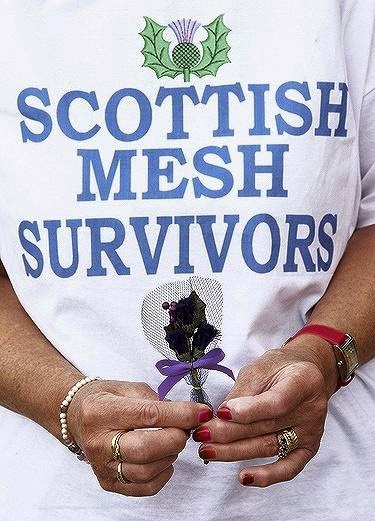
Elaine Holmes, of the Scottish Mesh Survivors’ Hear Our Voice campaign, said: “To say we feel betrayed is an understatement. We trusted Alex Neil to do the right thing. To find he was saying one thing in public and something else in private is awful.”
Neil’s successor Shona Robison has assured campaigners she has no plans to reinstate mesh procedures before the report is published.

She said: “All efforts are being made to ensure as much evidence is collected as swiftly as possible. This includes work to gather evidence regarding use of SMUS.
“The Independent Review will be asked for an update prior to the next meeting in January.
“There are no plans for any pronouncements prior to the final report.”

A spokesman for Neil said that he did not wish to comment.

Tuesday, December 9, 2014

FDA Device Panels: Undisclosed Conflicts and Loss of Public Trust


FDA Advisers’ Financial Ties Not Disclosed
Many Doctors Who Sit on Food and Drug Administration Panels Reviewing Medical Devices Have Links to Device Makers Undisclosed by the FDA


The FDA, which operates from these headquarters offices in Silver Spring, Md., seeks advice on medical-device approvals from a number of doctors and scientists with financial ties to device makers that the agency doesn’t publicly disclose. REUTERS
By JOSEPH WALKER
Dec. 8, 2014 10:33 p.m. ET

David Kandzari, an Atlanta cardiologist, also has worked as a consultant to makers of medical devices. He received at least $100,000 from them in five years, according to corporate and government data.
Another organization he works with, the Food and Drug Administration, doesn’t appear to mind. In October, the FDA put Dr. Kandzari on a panel reviewing a medical device made by Boston Scientific Corp. , one of the companies he has advised.The FDA didn’t disclose the connection. It was among numerous financial ties the FDA hasn’t disclosed between medical-device makers and the doctors and other experts who review devices for it, a Wall Street Journal analysis of corporate, state and federal data shows.
In panels evaluating devices involved in cardiology, orthopedics and gynecology from 2012 through 2014, a third of 122 members had received compensation—such as money, research grants or travel and food—from medical-device companies, an examination of databases shows.
Nearly 10% of the FDA advisers received something of value from the specific company whose product they were evaluating.
The FDA disclosed roughly 1% of these corporate connections.
The situation concerns critics. “Undisclosed conflicts raise questions about the decision-making capacity of the committees and whether the public can have confidence in their recommendations,” said Joseph Ross, an associate professor at Yale School of Medicine.
The FDA follows the committees’ advice in a large majority of instances, on prescription drugs as well as on medical devices. On devices, it has convened more than 20 meetings this year for recommendations on whether to approve novel products or put new regulations on older ones.
The issue arose most recently in July regarding a panel evaluating surgical tools called power morcellators that cut up uterine fibroid growths. A gynecologist stepped down from the panel not long after the Journal inquired about payments he had received from a maker of the devices, a connection the FDA hadn’t disclosed.
The FDA said under current law and policy, it discloses advisers’ financial interests only when it has determined the experts need a waiver in order to serve.
In making this determination, it has discretion. Having done paid work for a medical-device company doesn’t disqualify a doctor or scientist from sitting on an advisory panel, nor require public disclosure, as long as the work wasn’t related to the specific topic or product the panel focuses on, FDA officials said.
Current consulting work that is directly related to a panel topic is typically a disqualifying conflict, as is ownership of a large amount of the device maker’s stock, said FDA Associate Commissioner Jill Hartzler Warner. Still, if the FDA believes the individual’s expertise can’t be found elsewhere, it can issue a waiver.
It posts such waivers on its website. The agency said it can’t reveal any other financial ties or potential conflicts because what its scientific advisers tell it is confidential.
“Our challenge and our goal is to retain public confidence in the advisory-committee process and at the same time to obtain the very best advice,” Ms. Hartzler Warner said.


“If you have a financial interest with a sponsor or a related firm, but it’s not related to the product at the meeting, it’s not disqualifying,” she said. “The firms are often large and diverse, and whatever position the FDA takes, it won’t affect the relationship between the firm and the” expert adviser.
Doctors said their consulting work doesn’t affect their panel decisions. “I’ve never sat there on a panel and thought, ‘I wonder what my friends at companies X, Y and Z would say.’ I just don’t view it that way,” Dr. Kandzari said.
In the panel in October, he voted to approve a heart device from Boston Scientific, a firm that has paid him between $5,700 and $8,190 in consulting fees and expenses for food, travel and lodging since 2011, according to company data. The consulting didn’t concern the kind of device the October panel evaluated, so it posed no conflict, he said.
Dr. Kandzari confirmed he has consulted for various device makers. He questioned the accuracy of payment data posted by companies, saying, among other things, that some payments were actually made to his employer.
As for Boston Scientific, it said that device makers “are not consulted, or engaged in any way in the selection of panel members.”
The FDA said broader disclosure could discourage people from sitting on advisory panels. The agency already has a challenge getting highly qualified experts to sign on, Ms. Hartzler Warner said. Edward Y. Cheng, an orthopedic surgeon at the University of Minnesota Medical School and Cancer Center, said doctors have a strong financial disincentive to serve because they must take time away from their practices.


Among ties not disclosed by the FDA were $6,666 in consulting fees Dr. Cheng received from a maker of all-metal hip implants a year before he sat on a panel evaluating the safety of that type of hip. Dr. Cheng said the work was unrelated to all-metal hips.
Dr. Cheng said it is the FDA’s job to gauge whether a conflict exists but added: “if I personally thought a conflict existed that would affect my ability to remain unbiased, I would decline to participate.” The FDA said it doesn’t comment on individual panel advisers or their finances.
There is no central way for the public to learn of ties between panel members and makers of medical devices or drugs, which pay hundreds of millions of dollars a year to physicians in consulting, speaking and other fees, according to data from the Centers for Medicare and Medicaid Services. Concerns that such ties could affect doctors’ medical decisions have led to calls for greater transparency.
Many large drug and device companies post their payments to doctors online, often as part of legal settlements over fraud allegations. Some states, including Massachusetts and Vermont, post payments to physicians in their areas.
Doctors often must disclose potential conflicts when writing for scientific journals or giving presentations at medical meetings. The federal government this year launched a database called Open Payments, which so far has five months of 2013 data on company payments to doctors and teaching hospitals. The Journal used all these sources as well as archives maintained by PharmaShine, a service of Obsidian Healthcare Disclosure Services LLC.
No database reveals doctors’ and medical scientists’ stockholdings, so any search can give only a partial picture of financial ties.
The Journal’s tally of payments to members of panels on cardiology, orthopedic and gynecology devices in 2014 found that 64% received no value from device makers in the past five years. The rest did, varying from less than $15 for food and beverage to more than $500,000 in research funding.
Of doctors who received something from companies, 32% got less than $500 in value and 26% received $10,000 of value or greater.

Before advisory-panel meetings, the FDA asks potential members to report all financial ties, including consulting fees, research grants and stock, in companies with business before the panel and their competitors. In general, if the value of current interests exceeds $50,000, a person will be excluded, said an FDA guidance document.
If the agency decides a payment isn’t truly a conflict, it can issue what is called a “502 authorization” letting the person serve, said Ms. Hartzler Warner.
The 502 authorizations, unlike waivers, aren’t publicly disclosed.
The FDA declined to say how many 502 authorizations it issues annually.
“The problem with the FDA’s policy is you don’t know how they use their discretion,” said Celia Wexler, a lobbyist for the Union of Concerned Scientists, a group that opposes political interference in scientific and regulatory matters.
“It’s very difficult for us to know to what extent the FDA probes, and the extent to which panel members take the disclosure requirements seriously.”
Shortly before the July panel on morcellator surgical devices—which reviewed concerns they could spread hidden uterine cancers—the Journal discovered that panel member Andrew Brill had received nearly $100,000 in consulting fees in 2013 from Johnson & Johnson , then the largest maker of morcellators. The information was on a J&J-run public database, which also shows that another J&J unit paid $6,000 to Dr. Brill in 2013.
Dr. Brill resigned from the panel just before it met. The FDA said he recused himself because of his financial interests with companies. It declined to discuss why it initially appointed him to the panel. Dr. Brill declined to comment.
Documents posted on the website of the American Association of Gynecologic Laparoscopists show Dr. Brill also had ties to another morcellator maker, Karl Storz GmbH of Germany, for which he was a consultant and speaker in 2012.


Another corporate connection the FDA didn’t disclose: Dr. Brill sat on a panel examining risks of surgical mesh products, which are used to support internal organs and treat urinary incontinence, in 2011—a year when he received $82,600 from J&J subsidiaries, including one that makes surgical mesh. The information is on J&J’s website.
J&J declined to comment. It pulled its morcellators from the market earlier this year. Karl Storz didn’t respond to requests for comment.
Keith Isaacson, a doctor who served on the morcellator panel, had received nearly $12,000 in consulting fees from a J&J subsidiary in 2013, the Journal reported in July. Further review of databases shows that Dr. Isaacson also got $9,500 from J&J from 2010 through 2012 for consulting, food and education and training; and that he received $148,400 in consulting fees and other compensation from Karl Storz from 2009 through 2013. The information came from websites of J&J, a Massachusetts health agency and Open Payments.
At the panel’s meeting, Dr. Isaacson expressed doubt about data showing that women getting surgery for fibroids have a 1 in 350 chance of having malignant tumors that morcellators could spread, a panel transcript shows. He noted a recent study that found the risk was closer to 1 in 7,450.
Dr. Isaacson declined to comment. The FDA wouldn’t discuss the payments or why it placed Dr. Isaacson on the panel in view of these corporate ties.
Dr. Kandzari, the cardiologist who served on an October FDA panel evaluating a heart device, is the director of interventional cardiology and chief scientific officer at Piedmont Heart Institute in Atlanta. He has published many medical-journal articles. He said his consulting for device companies is aimed at helping firms design more-efficient clinical trials.
RELATED

  1. Deadly Medicine: Read the free WSJ e-book
  2. Women’s Cancer Risk Raises Doubts About FDA Oversight (July 18)
  3. Doctor Quits Uterine Device Safety Panel Over Conflict of Interest (July 10)
  4. Fate of Uterine Device Now in Hands of FDA (July 11)
  5. Gynecologists Resist FDA Over Popular Surgical Tool (Sept. 21)
  6. Surgical Tool Gets Strongest Warning (Nov. 24)
One FDA panel Dr. Kandzari sat on last year considered a pacemaker and a defibrillator made by Medtronic Inc. That is a company from which Dr. Kandzari received between $76,600 and $130,600 for consulting work, teaching, travel, lodging and meals from 2010 through 2013, according to company and federal databases. A panel transcript shows he abstained from voting on whether to approve expanded use of the devices because he wasn’t sure whether the benefits outweighed the risks.
Dr. Kandzari said his past consulting for Boston Scientific, the maker of the device that was being evaluated at the October panel, had concerned an arterial stent. The October panel focused on a different Boston Scientific product: a plug that seals a heart appendage to cut the risk of strokes caused by clots.
That plug, called the Watchman, had been backed by previous FDA panels but was being reviewed again because a study showed patients receiving it had more strokes caused by blood clots than patients getting the blood thinner warfarin.
While the panel in October deemed the device safe, a narrow majority that included Dr. Kandzari judged it not as effective as warfarin. Still, he voted yes in a 6-5 panel vote concluding its benefits outweighed its risks, tantamount to a recommendation of marketing approval.
Dr. Kandzari said despite his concerns that “stroke was not necessarily reduced with this technology,” he believed it should be available for patients who are at high risk of complications from warfarin.
Following the advisers’ vote, Boston Scientific told analysts it expected the Watchman to win FDA approval in the first half of 2015 and eventually reach $500 million in yearly sales.
—Andrea Fuller contributed to this article.
Write to Joseph Walker at joseph.walker@wsj.com


Wednesday, December 3, 2014

Dutch TV Exposes Farce of Pelvic Surgical Mesh Regulation Using a Tangerine Bag


http://www.radartv.nl/uitzending/archief/detail/aflevering/01-12-2014/
Watch the 20 minute video in this link above!  
Adam M. Slater, successful NJ plaintiff lawyer of Mazie Slater Katz & Freeman
Carl Heneghan, Oxford University, Center for Evidence-Based Medicine
Mark Fleischman, Corporate Action Network

Google translation from Dutch to English
Tangerine Mesh Bag as Surgical Device :  Implant Regulation is a Farce
01-12-2014

Breast implants leak. Pelvic floor mats which adhered so severe that they cause constant pain and not to remove more . Hip implants that release metal particles which then wander through the body and cause damage. These are just some examples of complications of internal medical devices.

Such implants , patients need help but worry they instead often much damage and severe ( pain) complaints.

Scandals implants for years regularly in the news. In Radar we have here already extensive attention to : in 2012, we highlighted the harmful effects of pelvic floor mats in women. Several women have become permanently disabled after placement of such mats.

The question arose as to how the editors medical devices end up in patients. Is first investigated the effects of placement of these devices? How the system is actually in each other to get an implant on the market? And how easy is it to develop a medical device and sell?
Radar will display a new medical device on the market on how to easily put such a device on the European market. Radar invented a pelvic floor mat ( a tool used in women who suffer from prolapse ) , which is based on four models from different manufacturers sold in Europe or were . The radar consists of a mat of mandarins net. This product is developed and described in a brochure and a technical file.

Watch the show ( above) and read more.

Original Dutch post
Mandarijnennetje als implantaat: Goedkeuring implantaten is een farce
01-12-2014

Borstimplantaten die gaan lekken. Bekkenbodemmatjes die zo ernstig verkleefd zijn dat ze constante pijn opleveren en niet meer te verwijderen zijn. Heupimplantaten die metaaldeeltjes afgeven welke vervolgens door het lichaam gaan zwerven en schade aanrichten. Dit zijn slechts enkele voorbeelden van complicaties bij inwendige medische hulpmiddelen.


Zulke implantaten zouden patiënten moeten helpen, maar in plaats daarvan zorgen ze vaak voor veel schade en ernstige (pijn)klachten.

Schandalen met implantaten zijn al jaren regelmatig in het nieuws. Ook in Radar hebben we hier al uitgebreid aandacht aan besteed: in 2012 belichtten we de schadelijke gevolgen van  bekkenbodemmatjes bij vrouwen. Meerdere vrouwen zijn blijvend invalide geraakt na plaatsing van zulke matjes.

De vraag rees bij de redactie hoe medische hulpmiddelen uiteindelijk in patiënten terecht komen. Wordt er eerst onderzoek gedaan naar de gevolgen van plaatsing van deze hulpmiddelen? Hoe zit het systeem eigenlijk in elkaar om een implantaat op de markt te krijgen? En hoe makkelijk is het om een medisch hulpmiddel te ontwikkelen en te verkopen?
Radar brengt een nieuw medisch hulpmiddel op de markt om aan te tonen hoe gemakkelijk een dergelijk hulpmiddel op de Europese markt gebracht kan worden. Radar verzon een bekkenbodemmatje (een hulpmiddel dat gebruikt wordt bij vrouwen die last hebben van een verzakking), dat gebaseerd is op vier modellen van verschillende fabrikanten die in Europa verkocht worden of werden. Het matje van Radar bestaat uit een mandarijnennetje. Dit product is uitgewerkt en beschreven in een brochure en een technisch dossier. 


Bekijk de uitzending (hierboven) en lees meer.

Tuesday, November 4, 2014

Stryker: $1.43 BILLION Settlement Offer (Criminal ?!)

http://www.nytimes.com/2014/11/04/business/stryker-settles-suits-by-hip-implant-patients-for-dollar1-billion.html?emc=edit_tnt_20141103&nlid=50639700&tntemail0=y&_r=0

Stryker Settles Suits by Hip Implant Patients for $1 Billion
By BARRY MEIER NOV. 3, 2014
Stryker, the major producer of artificial hip implants, said on Monday that it had reached a settlement of thousands of patient lawsuits involving now-recalled all-metal devices that is expected to cost the company about $1 billion.
The Stryker deal, negotiated with lawyers representing the patients, would be one of the highest amounts paid in the last year by an implant manufacturer to resolve claims by patients who said they were injured by a hip replacement in which a device’s ball and cup components were both made from metal.
Last November, the DePuy division of Johnson & Johnson agreed to pay about $2.5 billion to resolve lawsuits filed by 8,000 patients who said they were injured by an all-metal implant that it once sold, known as the Articular Surface Replacement or A.S.R.
All-metal implants once accounted for about one of every three devices used in the estimated 250,000 hip replacement procedures that are performed annually in this country. The devices have been largely abandoned after evidence emerged several years ago that the metal components could rub together, creating tiny particles of metallic debris that could severely damage a patient’s tissue and muscle.
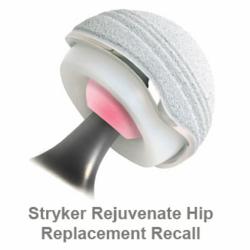
In announcing the settlement, Stryker, which is based in Kalamazoo, Mich., said that it covered patients who had received the Rejuvenate Modular-Neck or the ABG II Modular-Neck and who underwent operations to have the implant replaced. Stryker recalled both models in 2012 as complaints increased.
Stryker said that it had set aside $1.45 billion to settle the claims but that it expected the eventual expenses to be higher.
“This settlement program provides patients compensation in a fair, timely and efficient manner,” said William J. Huffnagle, the president of Stryker Orthopaedics.
Since abandoning all-metal implants, surgeons have returned to devices made of a mix of materials, such as plastic and metal.

http://atlanta.legalexaminer.com/defective-dangerous-products/hip-implant-settlement-proposal-announced-on-stryker-rejuvenate-and-abgii-cases/
Hip Implant Settlement Proposal Announced On Stryker Rejuvenate and ABGII Cases
Posted by Richard R. Schlueter
November 3, 2014 4:00 PM


Just over two years since the Stryker Rejuvenate and ABGII hip implant products were recalled from the market in June 2012, national leadership in the multi-district litigation (MDL) today announced a global settlement proposal for all Stryker Rejuvenate and ABGII hip implant victims who have undergone revision surgery to remove and replace their recalled Stryker hip implant on or before November 2, 2014.  The settlement proposal includes a base award amount of $300,000.00 to each claimant who has undergone revision surgery on or before to November 2, 2014, and otherwise qualifies for the settlement. There are certain limited potential reductions to the base award for age, prior hip revisions, and other relevant factors.  Claimants may also receive additional compensation, referred to in the proposed settlement as “Enhancements,” at a later date if they can demonstrate that they meet the eligibility requirements for the categories set forth in the settlement agreement.
Although participation is voluntary, it is expected that many of those that qualify (those who have had their recalled Stryker hip removed and replaced on or before November 2, 2014) will benefit from the settlement program, and may ultimately decide to participate in the settlement.  Any such decision should be made on an individual, case-by-case basis.
The following is a basic summary highlighting key aspects of the Master Settlement Agreement:
Stryker Hip Settlement
The settlement program applies to patients who are U.S. citizens and residents who had either an ABG II Modular Neck System or a Rejuvenate Modular Neck System implanted in their bodies in the United States, and who had a qualified surgery to remove and replace the recalled device on or before November 2, 2014.  The settlement program is also open to certain patients who have been deemed to be too sick or medically unstable to undergo a necessary revision surgery.
At Childers, Schlueter & Smith, our attorneys will immediately undertake to determine how the proposed settlement will affect each of our clients, and will work with each client individually to carefully consider the benefits of the proposed settlement so that they can make an informed personal decision on whether or not to participate.  As a nationally appointed leader in this litigation, founding partner Richard R. Schlueter will ensure each and every one of our clients has all of the information he/she needs to make the best choice for his/her unique situation.   Richard Schlueter has been involved in the various hip implant litigations (including DePuy ASR/Pinnacle, Zimmer Durom Cups, Biomet M2a Magnum and Wright Conserve Plus among many others) for several years, and has unique knowledge relating to hip implant failures and the injuries caused by those failures. Our current and future clients will be continue to be very well represented and informed during the entire process.
Attorneys representing those interested in participating in the Stryker hip implant settlement will have to register their clients in the program on or before the initial reporting deadline of December 14, 2014.  After that, the next deadline will be the formal enrollment of each individual patient who chooses to participate into the Settlement Program.  Those qualified claimants who would like to participate in the settlement program must enroll by March 2, 2015.  If less than 95% of the qualified claimants elect to participate in the settlement, Stryker has the ability to walk away and cancel the settlement program.  Stryker must make that decision on or before June 15, 2015.  Assuming the participation threshold is met and the settlement continues after June 15, 2015, the deadline to file claims for Enhanced benefits is September 30, 2015.  Additional compensation through the Enhanced benefits portion of the settlement will relate to damage to the femur, soft tissue damage, additional procedures and infection.  There is a cap on the Enhanced damages so that most total claims (Base award and Enhanced benefits) will be no more than $550,000.00 per claimant.
Based on the timing of the deadlines in the proposed settlement, it is unlikely that any settlement payments will be made prior to late summer or early fall 2015.
For patients who are not eligible for the settlement program, Stryker’s existing program for reimbursement of eligible out of
pocket costs, administered by Broadspire, remains available.  The decision to undergo a revision surgery is a medical decision, not a legal decision, and should be made only by patients in consultation with their surgeons.  If you were implanted with a recalled Stryker Rejuvenate or ABGII hip implant product but are not eligible for the settlement program, all of your legal rights and claims are preserved and you will not be affected so long as you have a filed legal claim with the Court.  Patients who have been implanted with a recalled Stryker hip in both hips (referred to as “bilateral” hip implants), in whom only one hip has been revised, will retain all of their claims and legal rights in regard to the unrevised hip, even if they participate in the settlement for their revised hip.
Childers, Schlueter & Smith is committed to continue litigating all claims for our clients who don’t qualify, who are arbitrarily penalized so as to not receive an offer under this proposal, who have not had revision surgery by today’s date, and those who choose not to participate in the proposed settlement.  If you have a recalled Stryker Rejuvenate or ABGII, please call us for a free consultation regarding your legal options.
For those looking for answers and guidance on these and/or any other Stryker hip implant related issues, we welcome you to contact our office for more information.


http://abcnews.go.com/Business/wireStory/stryker-pay-143b-settle-hip-implant-cases-26664666

Stryker to Pay $1.43B to Settle Hip Implant Cases
ST. PAUL, Minn. — Nov 3, 2014, 9:04 PM ET

Medical implant maker Stryker will pay at least $1.43 billion to settle thousands of lawsuits from patients who had to have surgery to remove problematic hip implants, under a deal announced Monday.
The agreement, brokered by a New Jersey Superior Court judge, resolves state and federal lawsuits against the maker of orthopedics. It was announced Monday in U.S. District Court in St. Paul, Minnesota.
Stryker said the $1.43 billion figure represents the "low end of the range of probable loss to resolve these matters."
The lawsuits stem from two hip implants that Stryker recalled due to corrosion and other problems in 2012. One year ago Johnson & Johnson paid $2.5 billion to settle 8,000 lawsuits from patients who had to have the company's metal ball-and-socket hip implant removed or replaced.
Plaintiffs in 39 states alleged Kalamazoo-based Stryker sold defective hips that corroded while in patients' bodies and caused illness, including pain and swelling in the tissue around the implant.
"The settlement represents one of the largest medical device settlements with an unlimited compensation fund," said Minneapolis lawyer Charles Zimmerman, who helped negotiate the deal as part of the lead-counsel committee for the case. "We are pleased that we were able to reach a settlement with such meaningful relief."
Stryker Corp. expects to make most of the payments by the end of 2015.
Thousands of cases from patients across the country have been consolidated under a single federal judge in Minnesota in a "multi-district litigation," a common type of mass lawsuit filed against health care companies, the Star Tribune of Minneapolis reported.

Stryker Corp. to pay at least $1.4 billion to settle hip replacement lawsuits

Stryker Corp., whose Kalamazoo headquarters is shown here, has entered an agreement intended to resolve a wave of state and federal lawsuits related to two hip replacement products that it recalled in July of 2012.
Al Jones on November 03, 2014 at 6:39 PM, updated November 03, 2014 at 7:22 PM
KALAMAZOO, MI – Stryker Corp. has agreed to pay at least $1.4 billion to settle thousands of lawsuits by U.S. patients who had surgeries to revise problematic Stryker hip replacements.
The settlement in New Jersey's Bergen County Superior Court is intended to compensate individuals who had to have surgery to replace either of two Stryker products -- the Rejuvenate Modular-Neck hip stem and/or ABG II Modular-Neck hip stem.
Following complaints by patients of pain and swelling that were attributed to fretting and corrosion of the metal-on-metal hip implants, Stryker voluntarily conducted a worldwide recall of the products in July of 2012.
The company did not provide an estimate of how many people may have been effected or how many may be compensated. It also did not offer a representation of how much individuals stand to receive.
"The ultimate cost to entirely resolve these matters will depend on many factors that are difficult to predict and may be materially different than the amounts accrued to date," the company stated in a press release. "Further charges to earnings may need to be recorded in the future as additional information related to patient enrollment in the Settlement Program becomes available."
The company stated that it expects to make the majority of the payments under the settlement agreement by the end of 2015. The agreement, which is intended to resolve a wave of state and federal lawsuits, was brokered by New Jersey Superior Court Judge Brian R. Martinotti with the help of former United States Magistrate Judge Diane M. Welsh, acting as chief mediator.
It covers individuals who have already had surgery to replace the Stryker products. It also covers those who are already party to a lawsuit as well as those who are not.
In a June report, MT Services LLC reported that some cases involving revisions of Stryker Rejuvenate and ABG II hips could be worth more than $500,000.
According to Stryker, patients eligible for compensation should talk with their attorneys, if they have one, or contact the Settlement Program claims administrator at www.strykermodularhipsettlement.com or 1-855-382-6404. Patients do not need an attorney to participate in the Settlement Program.
A program called Broadspire, being done in partnership with third-party claims administrator Broadspire Services Inc., offers support for recall-related care among U.S. patients who have not had surgey to remove the recalled products.
In its press release, Stryker advised those patients to visit http://www.aboutstryker.com/modularneckstems/or call 1-888-317-0200 for more information. It stated that patients do not need an attorney to participate in the Broadspire program.
Kalamazoo-based Stryker produces a wide range of medical technologies including surgical devices, patient-handling devices, hospital beds and orthopedic implants such as replacement hips and joints.

MLive business writer Al Jones may be contacted at ajones5@mlive.com. Follow me on Twitter at ajones5_al.